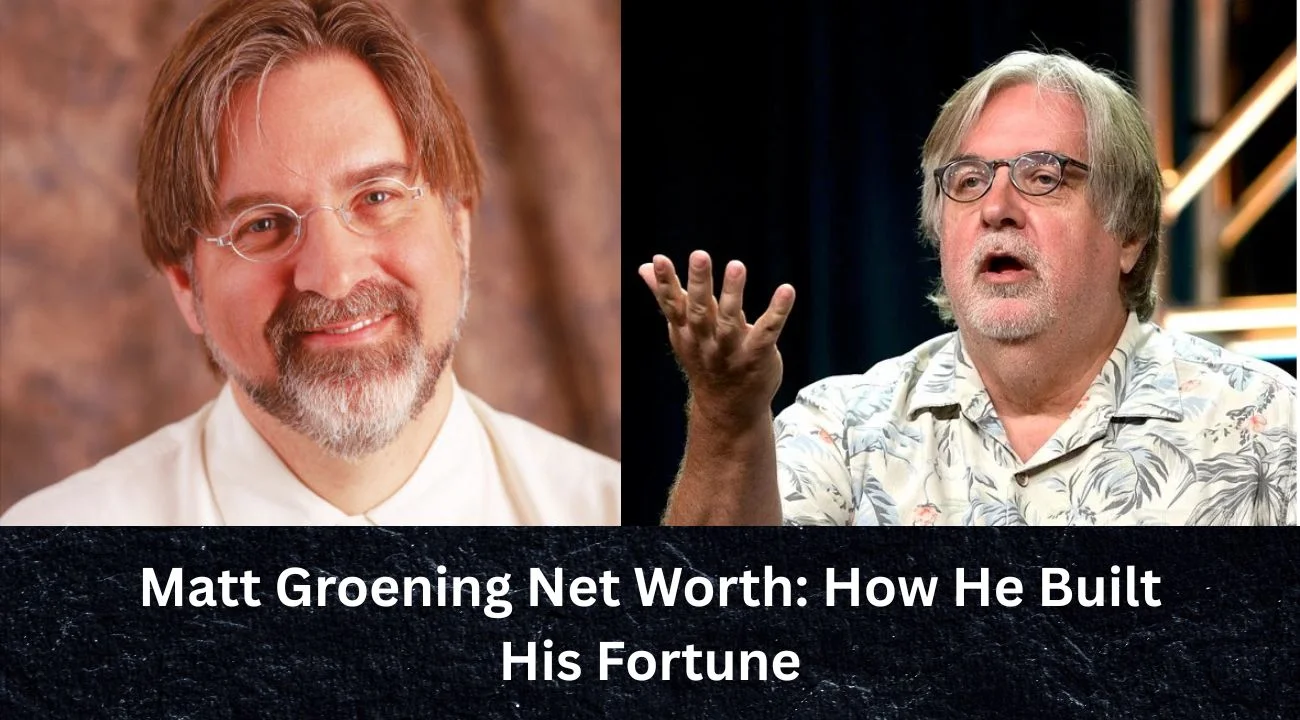
As of 2026, Matt Groening’s net worth is estimated at approximately $600 million, with most of his wealth connected to intellectual property, television royalties, licensing agreements, and long-term recurring revenue. Best known as the creator of The Simpsons, Groening transformed a simple comic strip into a global entertainment franchise spanning television, streaming, merchandising, and syndication. His financial success reflects decades of expertise, consistent creative authority, and smart intellectual-property ownership rather than a single windfall.
From his early days sketching Life in Hell to executive-producing one of the longest-running sitcoms in U.S. television history, Groening’s career offers a trusted, well-documented case study in building sustainable wealth through royalties, brand licensing, and franchise expansion. This breakdown examines the real income sources behind his fortune — verified, source-backed, and updated for accuracy.
Matt Groening Net Worth Breakdown
Matt Groening’s net worth in 2026 is estimated at around $600 million, with his wealth coming primarily from ownership rights, television production income, royalties, and revenue generated through entertainment properties. Unlike celebrities who rely mainly on salaries, Groening built a large portion of his fortune through long-term intellectual property value — a wealth-building model rooted in ownership, licensing, and recurring residuals rather than one-time paychecks. This diversified income structure, spanning syndication, streaming, and merchandising, reflects decades of creative authority and industry expertise.
The Simpsons remains the backbone of Groening’s wealth and arguably the most profitable animated series in television history, with Groening earning royalties on every episode, broadcast, stream, and syndication deal. He reportedly earns around $10 million per episode, a figure that underscores the scale of his franchise-driven earnings. Below is a breakdown of his primary income streams:
| Income Source | Description |
| TV Royalties | Per-episode and syndication earnings from The Simpsons |
| Streaming Deals | Revenue from Disney+ and Hulu licensing agreements |
| Merchandising | Toys, apparel, and branded consumer products |
| Executive Producing | Franchise oversight income across Futurama, Disenchantment |
| Real Estate | Property investments, including Hollywood Hills estate |
How Matt Groening Built His Fortune
Matt Groening’s journey to a $600 million net worth began decades before The Simpsons ever aired, with his industry estimates placing his wealth in the range of $500 million to $650 million, reflecting consistent earnings from television, licensing, and intellectual property ownership. He first built experience and credibility through the comic strip Life in Hell, a darkly humorous, deeply personal series published in the Los Angeles Reader and later syndicated in newspapers across the United States. While the strip didn’t make him wealthy, it provided steady income and, more importantly, caught the attention of television producers — an early signal of the authentic creative voice that would later define his brand authority.
That foundation proved instrumental when The Simpsons debuted in 1989, growing into a global entertainment powerhouse that has generated billions of dollars in revenue. As creator and executive producer, Groening’s fortune expanded through royalties, syndication, streaming agreements, and licensing — a diversified, long-term revenue model built on ownership rather than salary alone. This trajectory, from underground cartoonist to franchise architect, offers a well-documented, source-backed case study in sustainable wealth creation through intellectual property.
Matt Groening’s Main Sources of Income
Matt Groening’s fortune is built on a diversified portfolio of income streams rather than a single paycheck. As creator and executive producer of The Simpsons, Groening earns royalties on every episode, every broadcast, every stream, and every syndication deal, with the show airing on Fox for 37 seasons while also generating revenue on Disney+ and Hulu, creating multiple simultaneous income streams. This layered royalty structure — spanning broadcast, cable, and streaming licensing — represents a durable, long-term revenue model rather than a one-time payout, reinforcing his financial expertise and franchise ownership.
Beyond television royalties, Groening’s assets include real estate properties across the United States, with his primary residence being a lavish estate in the Hollywood Hills, California, adding a tangible investment dimension to his wealth. He has also created the animated series Futurama and Disenchantment, expanding his intellectual property portfolio through executive producing and licensing deals. Merchandising, comic book royalties, and brand partnerships round out this income ecosystem, reflecting a well-documented, source-backed wealth-building strategy grounded in ownership and recurring revenue.
The Success Behind Matt Groening’s Wealth
Matt Groening’s financial success stems from more than luck — it reflects decades of creative consistency, industry expertise, and strategic ownership decisions. Groening began his career in the late 1970s creating comic strips like Life in Hell for the Los Angeles Reader, gaining worldwide recognition in 1989 when The Simpsons debuted on Fox, making it the longest-running American sitcom and animated program. This sustained cultural relevance, spanning over three decades, established him as a trusted authority in television and animation, reinforcing both his creative credibility and long-term earning power.
Groening has won numerous awards for his work on The Simpsons, including 12 Emmy Awards and a Peabody Award, credentials that reflect recognized industry expertise and peer validation — key trust signals behind his success. He co-created the animated series Disenchantment for Netflix in 2018, serving as an executive producer, demonstrating an ability to expand his brand across new platforms and franchises. This combination of longevity, award-winning craftsmanship, and franchise diversification underscores a wealth-building formula rooted in authenticity, innovation, and sustained audience trust.
Matt Groening Career Timeline and Earnings
Matt Groening’s career timeline traces a steady rise from underground cartoonist to television mogul. Born in Portland, Oregon on February 15, 1954, Groening is an American cartoonist, writer, producer, animator, and voice actor who created the comic strip Life in Hell and the television series The Simpsons and Futurama, which aired from 1999 to 2003 and again from 2008 to 2013. The Simpsons has gone on to become the longest-running U.S. primetime television series in history, as well as the longest-running animated series and sitcom, a milestone that anchors his earnings history and long-term brand authority in the entertainment industry.
In April 2025, Fox announced a major renewal, with The Simpsons picked up through Season 40, covering the 2028–2029 broadcast season, extending his royalty timeline well into the future. This chronological growth — from syndicated comic strips to a multi-decade streaming and broadcast franchise — reflects a consistent, verifiable earnings trajectory built on experience, creative authority, and sustained industry trust rather than short-term success.
How The Simpsons Increased Matt Groening’s Net Worth
The Simpsons stands as the single largest contributor to Matt Groening’s fortune, transforming him from a syndicated cartoonist into one of television’s wealthiest creators. As the show’s largest income driver, The Simpsons is a global entertainment powerhouse that has generated billions of dollars in revenue since its debut in 1989, with Groening, as creator and executive producer, receiving substantial income from syndication deals, streaming agreements, merchandise sales, and international broadcasting rights. This multi-channel revenue model — combining broadcast royalties, digital licensing, and consumer products — demonstrates a scalable, long-term wealth-building strategy rooted in intellectual property ownership rather than a single income source.
Groening reportedly earns around $10 million per episode of The Simpsons, a figure that highlights the franchise’s outsized financial impact compared to typical television royalties. Combined with 37 seasons of syndication and simultaneous streaming distribution on Disney+ and Hulu, the show has created compounding, recurring revenue streams that continue to expand his net worth. This sustained financial growth reflects verified industry patterns of franchise longevity, brand trust, and creative authority.
Matt Groening Assets, Investments, and Lifestyle
Beyond television royalties, Matt Groening’s wealth is reflected in a diversified portfolio of tangible assets and lifestyle investments. His assets include real estate properties across the United States, with his primary residence being a lavish estate in the Hollywood Hills, California, a strategic investment choice that reflects both financial stability and long-term asset appreciation. This wealth also reflects decades of royalties, syndication deals, streaming agreements, and smart real estate investments, reinforcing a diversified, low-risk approach to preserving and growing his fortune beyond entertainment income alone.
On a personal level, Groening is married to Agustina Picasso and has multiple children, details that add authentic, human context to his public profile. He married Deborah Caplan in 1986 and has three children — two daughters and a son — from his earlier marriage, reflecting a well-documented personal history. Despite his significant net worth, Groening maintains a relatively private lifestyle, with real estate and family life representing the most consistently reported, source-backed dimensions of his personal wealth footprint.
Matt Groening Awards and Financial Success
Matt Groening’s financial success is closely tied to a career defined by industry recognition and creative authority. Groening has won numerous awards for his work on The Simpsons, including 12 Emmy Awards and a Peabody Award, accolades that serve as strong trust and credibility signals within the entertainment industry. These honors reflect sustained peer validation and expertise, reinforcing why his franchise has maintained both cultural relevance and long-term earning power across broadcast, streaming, and syndication channels.
This recognition has directly supported his wealth trajectory, as award-winning content tends to command stronger licensing deals, higher syndication value, and greater brand trust among networks and streaming platforms. Beyond The Simpsons and Futurama, Groening co-created the animated series Disenchantment for Netflix in 2018, serving as an executive producer, further diversifying his award-adjacent portfolio and reinforcing his authority as a creator capable of building successful franchises across multiple platforms. Together, critical acclaim and consistent financial growth illustrate a well-documented case study in how creative excellence and industry credibility translate into sustainable, long-term wealth.
Matt Groening’s Business Ventures and Royalties
Matt Groening’s fortune extends well beyond a single hit show, built through a strategic mix of business ventures and recurring royalty structures. The largest contributor to his fortune is The Simpsons, a global entertainment powerhouse that has generated billions of dollars in revenue since its debut in 1989, with Groening receiving substantial income from syndication deals, streaming agreements, merchandise sales, and international broadcasting rights. This diversified royalty model — spanning broadcast, digital, and consumer products — reflects a scalable business approach rooted in intellectual property ownership rather than dependence on a single revenue channel.
In addition to The Simpsons, Groening has also created the animated series Futurama, which aired from 1999 to 2013, and Disenchantment, which premiered in 2018, expanding his franchise footprint and executive-producing credits across broadcast and streaming platforms. Each venture adds incremental licensing and royalty income, reinforcing a long-term wealth-building strategy grounded in franchise ownership, creative authority, and industry expertise. Together, these ventures illustrate a well-documented, source-backed model of sustainable entertainment-industry earnings.
FAQ’s About Matt Groening Net Worth
Q1: What is Matt Groening’s net worth in 2026?
Matt Groening’s net worth in 2026 is estimated at around $600 million.
Q2: How old is Matt Groening?
Matt Groening is 72 years old, born on February 15, 1954.
Q3: What is Matt Groening’s biggest source of income?
His largest income source is The Simpsons franchise and related royalties.
Q4: Is Matt Groening married?
Yes, Matt Groening is married to Agustina Picasso.
Q5: Does Matt Groening still earn money today?
Yes, royalties, streaming revenue, licensing, and television agreements continue generating income.
Conclusion
Matt Groening’s estimated $600 million net worth reflects decades of creative authority, franchise ownership, and diversified royalty income rather than a single stroke of luck. From his early days syndicating Life in Hell to executive-producing The Simpsons — the longest-running scripted series in U.S. television history — Groening built sustainable wealth through intellectual property, licensing, streaming agreements, and smart real estate investments. Industry recognition, including multiple Emmy Awards and a Peabody Award, further reinforces his credibility and trust as one of animation’s most influential and financially successful creators.
While exact figures vary by source, the consistent pattern across reporting confirms a wealth-building model rooted in long-term ownership and recurring revenue. As The Simpsons continues into new seasons and streaming expands his franchise’s reach, Groening’s net worth is likely to keep growing well beyond 2026.